
The Sensorium
Something is dying. Something older is coming back. These are not separate events.

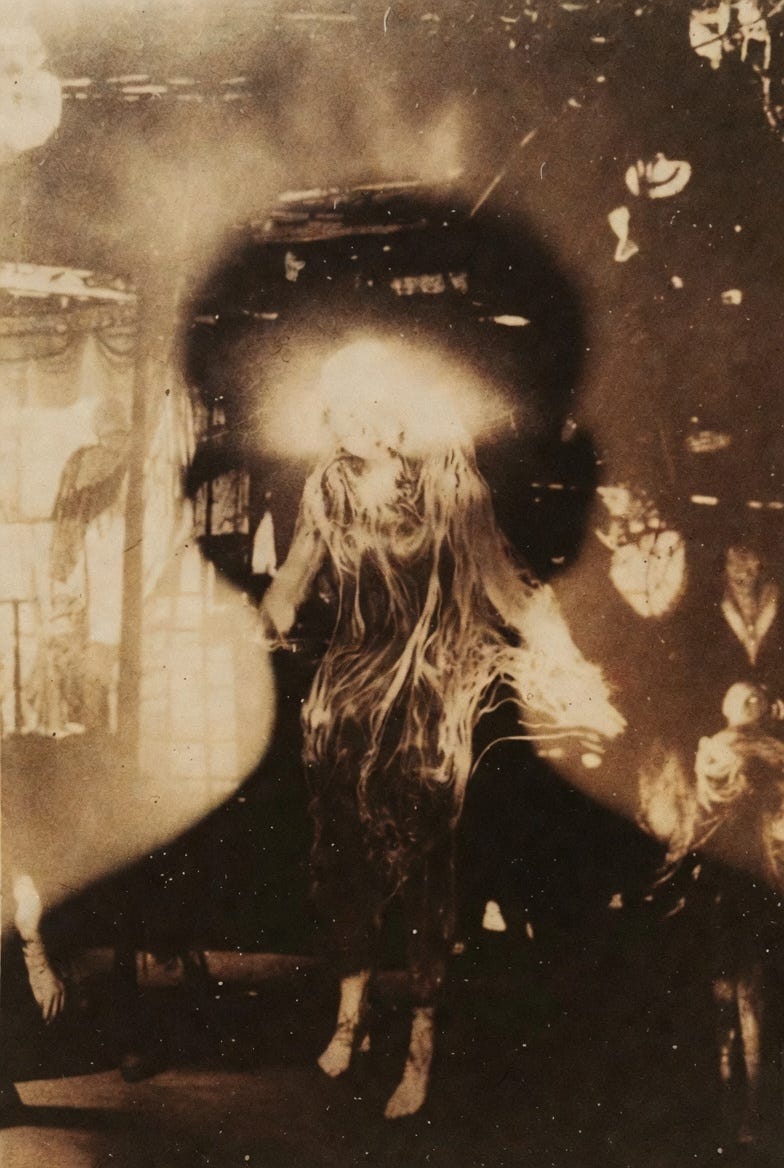
Francis Bacon put nature on the rack. That was his phrase, not mine — the natural philosopher’s job was to torture the world until it confessed its secrets. Strip away the poetry and this is the founding charter of the modern mind: the knowing subject here, the known object there, and between them a method for extraction. Efficient. Brutal. Extraordinarily productive. And amputating, at the moment of its greatest triumph, precisely the faculty it had decided was unnecessary.
We are living in the long aftermath of that amputation.
The print mind built everything. Empires, science, the mapped stars, the rule of law, the separation of powers, the novel, the corporation, the self. Sequential, analytical, linear — one thing following another, causes producing effects, arguments proceeding from premises to conclusions. It excelled at breaking the world into parts. Newton’s laws. The corporate spreadsheet. The written constitution. All of it: the world dissected, labelled, and made legible.
The cost was invisible for three centuries because the benefits were so spectacular. Then it became visible all at once.
The infrastructure doesn’t get built. The institutions don’t work. Disinformation spreads faster than correction. Algorithms sort us into tribes with the calm efficiency of a machine that doesn’t know it’s doing harm. The typographic mind — Postman’s phrase, and he was right about this much — cannot process the world it created. The tool is failing under the weight of its own success.
This is a cognitive problem, not a political one.
I’d venture that most people still don’t know that Isaac Newton wrote more on Scripture and hermetic philosophy than he ever wrote on physics. More on the mystical transmutation of matter than on the laws of motion. He was a theologian, an alchemist, a man who believed the universe was a divine code in which mathematics, matter, and spirit were not three things but one thing seen from different angles. Gravity, for Newton, was a spiritual sympathy between bodies — an emanation of something he was not embarrassed to call God’s vitality. “Nature is a perpetual circulation of corporeal and incorporeal spirit.” That’s Newton. Private manuscripts, not the Principia. But Newton.
The Enlightenment took what it needed from him and discarded the rest. The laws of motion, yes. The cosmic resonance, no. It required the dissection but not the man who performed it — because the man who performed it was still, at his core, one of the last practitioners of something the Enlightenment was in the process of destroying.
What Newton had — and what Bacon’s method was designed to eliminate as contamination — was the integrative sensorium. The capacity to hold reason and imagination simultaneously without the one corrupting the other. To see the falling apple and intuit the sympathies of the cosmos. To work the equation and feel the theology in it. As wholeness.
Blake saw what was happening in real time and it drove him half-mad with fury.
The dark Satanic mills are not factories. This is the misreading that turns Blake into a romantic environmentalist a century before the term existed. The mills are the mills of Bacon, Locke, Newton — the grinding machinery of a certain kind of reason that reduces everything it touches to inert matter, dead cause, measurable effect. Blake wasn’t against science. He was against the amputation — the deliberate excision of the faculty that holds the parts in relation to the whole.
“To see a World in a Grain of Sand” is a reminder that if we rely only on cold facts and ignore our senses, we’re only using half our faculties, and we miss the very real fractal truths available to us.
He was ignored. The print mind was in full ascent and had no use for his warning. The method was working. The dissection was producing results. Why would you listen to a man arguing for the organ you’ve just removed when the surgery appears to be going so well?
The surgery is no longer going well.
The internet overwhelms the print mind because it is structurally unlike anything the print mind was built to process. It’s relational, emergent, recursive, participatory. It behaves like an ecosystem, not a book. The typographic mind — sequential, analytical, one-thing-at-a-time — confronts it and produces the symptoms we now live inside: fragmentation, tribal enclosure, the inability to distinguish signal from noise, the vertigo of a compass that has lost its north.
The internet doesn’t resemble the future the print mind was building toward, it resembles something much older. The oral culture, the networked, the reputation-based, the symbolic, the participatory — the world before Bacon put nature on the rack and before print locked in his method as the only legitimate mode of thought.
McLuhan called it secondary orality. We are not returning to primary oral culture — the retrieval is never simple repetition. But we are retrieving something: the integrative faculty that print amputated, coming back in different substrate, under different conditions, for the same structural reasons it was necessary before.
Take the humble meme: is it really a degradation of discourse? Or a return of a cognitive mode that print had no room for — dense, symbolic, layered, doing in an image what Shakespeare’s metaphors did in language: holding multiple registers simultaneously, making you feel the meaning before you can articulate it. When Lear calls down the storm it’s not decorative. The storm is thinking. The weather and the madness are one cognition operating at full bandwidth, not the attenuated trickle that a policy document permits.
We mocked this out of serious discourse. It came back as memes because that’s where it could still breathe.
Bacon’s method wasn’t wrong. It was incomplete. Newton knew this and kept the rest of himself alive in private, in manuscripts that his executors found embarrassing and that sat unread for two centuries. Blake screamed it from the margins of a culture too busy being productive to listen.
The print mind is dying because the world it created has exceeded its processing capacity. What replaces it won’t be designed — you cannot design a cognitive shift any more than you can design a season. But you can notice what’s being retrieved. You can stop amputating it again in the name of rigour. You can let the integrative sensorium come back without immediately pathologising it as the enemy of thought.
Newton held the equation and the theology simultaneously. Blake held reason and imagination simultaneously. The faculty they shared isn’t mysticism and it isn’t irrationality. It’s the thing that knows how the parts relate to the whole — which is, it turns out, the thing we most desperately need and have spent three centuries systematically removing.
The rack is breaking. The confession it forced was real but partial. Nature has more to say. Much more.
mantecanaut.substack.com
I’m gonna use this framing, it rings true